
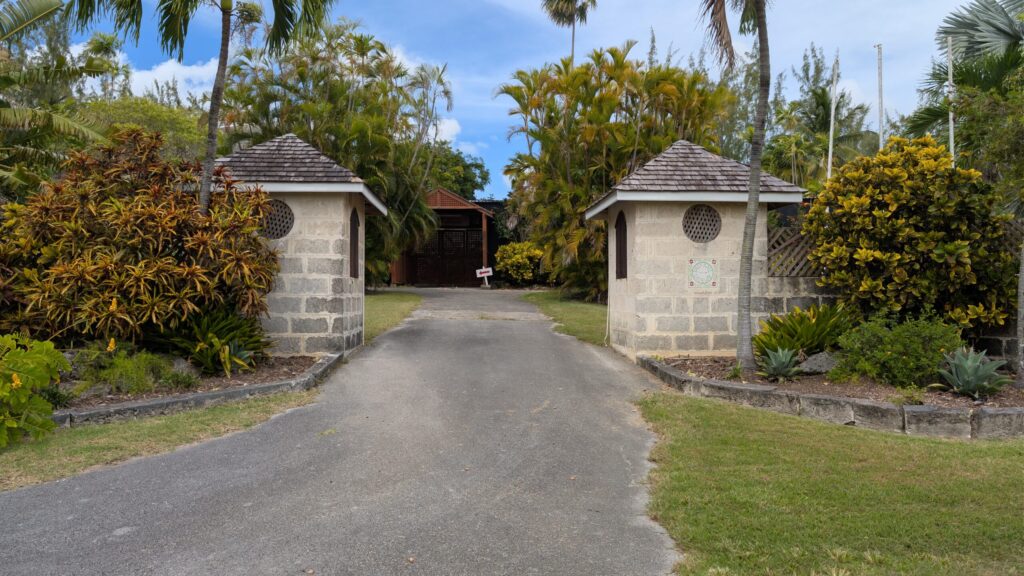
History of Balls Plantation
Balls was once a sugar plantation of about four hundred acres. The name comes from a Barbadian planter family named Ball. In 1733 Frances Ball, daughter of the Hon. Guy Ball, married Edwin Lascelles, who was collecter of Customs in Barbados. Their son, Edward, became the First Earl of Harewood and their descendants are now cousins of the Royal Family, as the sixth Earl of Harewood married the Princess Royal, daughter of King George V. Another descendant was the late William Temple, Archbishop of Canterbury.
In the early 19th Century, Balls was owned by the Hon. Renn Hampden. His son, Renn Dixon Hampden, born in Barbados in 1793, was educated in England where his appointment as Professor of Theology at Oxford gave rise to a once famous controversy on account of his supposedly nonorthodox views. Nevertheless he became Bishop of Herefore – 1848 – 1868, sharing some of his time in the House of Lords with anouther Barbadian, Samuel Hinds, Bishom of Norwich.
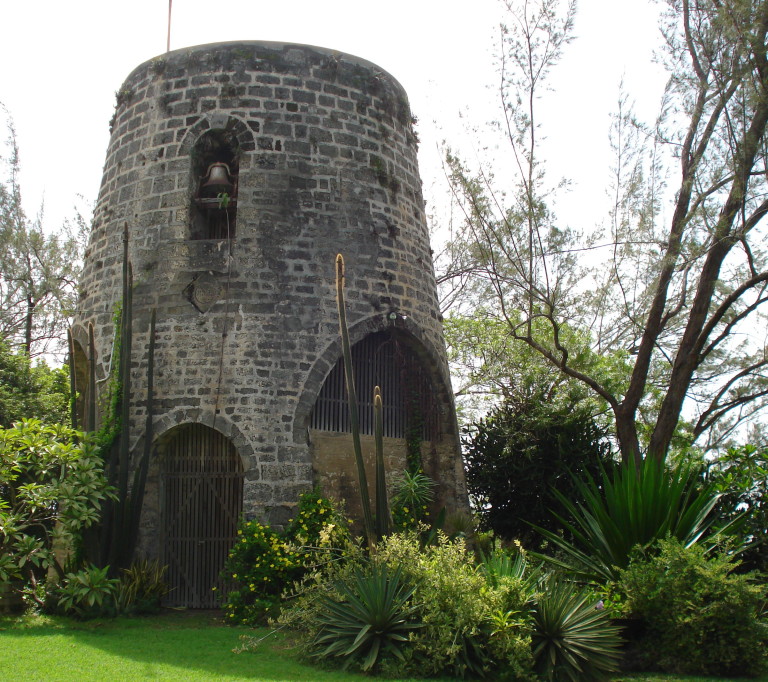
Like nearly all Barbadian plantations, Balls used to grind its cane by means of windmills. The Old Mill dated 1866 is still there and the windmill was still working in the early years of the 1900’s although the Plantation changed over to a steam factory in 1921. The Barbados Horticultural Society bought the old
Boiling House in 1976.
History of the Barbados Horticultural Society
The Society has taken up the mandate of promoting horticulture and facilitating its development in Barbados. It is a non-profit, non-governmental organization with a membership of over three hundred. Through the ensuing years, the Society paid particular attention to the aspect of exhibitions, mostly in conjunction with the Agricultural Society. For about the last twenty years, the Society staged its own shows.
Through the fifties, sixties and early seventies, there was a growing realization that the Society should own its own headquarters, and fund-raising to help achieve this objective became a priority.
1927
Thirteen horticulturalists founded the Barbados Horticultural Society – one of these founders was H. N. Leacock.
When the Society bought the old Boiling House at Balls Plantation for their headquarters, the Annual Flower Show was held at various people’s homes but more often at Queens Park . The first Annual Flower Show was held in 1928 a year after the Society was formed and the entrance fee for adults was one shilling.
1975
The Barbados Horticultural Society bought 6 ½ acres of the Land from Ridge Ltd. Nephew of H. N. Leacock, past President Christopher Leacock helped acquire the Old Boiling House at Balls as well (i.e. 2 ½ acres plus 4 acres).
1976
The Society had raised $40,000, enough to enter into an agreement with Ridge Ltd to purchase an old boiling house of substantial coral stone construction at Balls, Christ Church . This was now the basis of the exhibition hall.
The First Flower Show was held at Balls.
1977
Four acres of arable land adjoining this property was purchased.
1978
The Society agreed to purchase the “one hundred year old” Mill Tower dated 1866 and 58,000 sq ft of land adjoining the original property.
1987
A further 7.6 acres of arable land east of the property was purchased from Ridge Ltd with the view that this would some day be the site of a beautiful Arboretum.
First subvention of $10,000 given by Minister of Agriculture Mr. Warwick Franklin at a Tree Planting Ceremony of Palms and trees at the entrance.
1994
The Society was invited by the Philadelphia Horticultural Society to be one of the main attractions at the Philadelphia Flower Show from March 6th – 13th 1994. The exhibit displayed was very well received and the reviews were excellent. Exhibits have been put up in Landesgartenschau, Germany as well as Charlston in North Carolina and more recently at the Canada Blooms Show in Toronto, Canada.
1996
The Society was awarded the Holford medal by the Royal Horticultural Society for the Best Amateur Exhibit for the Year in the UK .
Now the Barbados Horticultural Society’s calendar reads thus:
Each Sunday throughout January and February various private gardens are opened to the public for a small fee. This was started in 1988 by Christopher Leacock and Jean Robinson.
End of January the Society holds its Annual Flower and Garden Show which event lasts two days and is the biggest fundraiser for the Society.
End of February the Society participates in Agrofest by mounting a big floral exhibit.
Mid May the team for Chelsea leaves for London . Before this can happen flowers and foliage are collected from all over the island cleaned, passed by Plant Quarantine and with the help of about 25 people all packed carefully in between 50 and 60 boxes to be taken by British Airways to London. British Airways has never charged for the transporting of these flowers.
Chelsea – The Society has always taken a team of four persons with at least five more unpaid and going for the love of to work. At least five other people based in England come to work. After that is Press Day, when BBC and all other radio and talk shows of England roam the Marquee to take pictures, get interviews etc. Needless, to say this is hugely beneficial for the Tourist Industry in Barbados as to start with the RHS sells 100,000 tickets each year. So far the Society has won twenty four Gold medals, ten Silver Gilts and one Silver medal.
“Art must be a guide, a leader in the evolution of mankind towards a higher spiritual goal.
None of the Arts is more able to do this than that of the garden. It is a living expression of peace and happiness, and therefore a great influence in the forming of a people.”
— Jens Jensen